Source Gold Foil Perfume Label for Packaging, Gifts, and Crafts
Compare 30 gold foil perfume label options from verified suppliers in China. Buyers can evaluate customization, materials, and MOQs for packaging, gifts, and crafts applications.
Key considerations
Products List









Comprehensive Sourcing Guide
Strategic Sourcing Guide for Gold Foil Perfume Labels
The global fragrance market relies heavily on visual identity, where the label serves as the primary interface between the product and the consumer. For procurement professionals seeking gold foil perfume labels, the sourcing landscape is defined by a convergence of aesthetic precision, material integrity, and regulatory compliance. Gold foil application is not merely a decorative finish but a critical quality indicator that influences perceived value and brand positioning. This guide synthesizes available product attributes and industry standards to provide a disciplined framework for evaluating suppliers and securing high-performance labeling solutions.
Technical Specifications and Material Composition
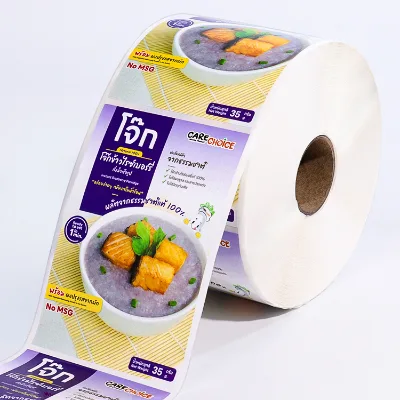
Understanding the technical baseline of gold foil labels is the first step in any procurement strategy. The core material for these labels is typically paper, which offers a balance of printability and structural rigidity suitable for perfume bottles. The production process often involves machinery-based processing to ensure consistency in the application of the foil. The specific model identifiers observed in the market, such as "Perfume Labels026071406" or "Perfume Label 052001," indicate that suppliers often categorize their offerings by specific design templates or functional models.
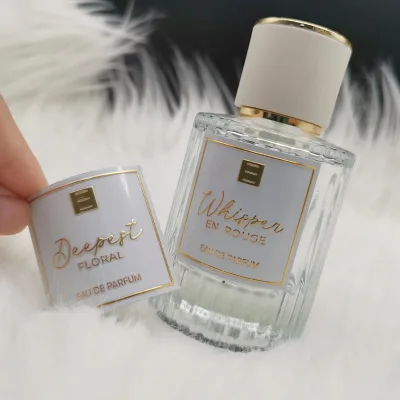
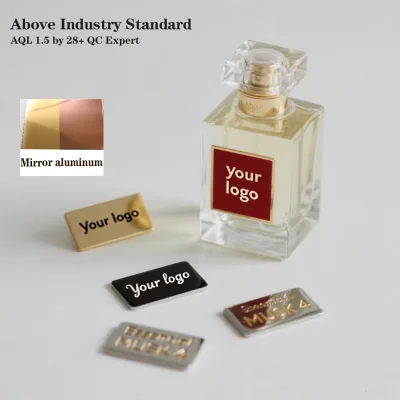
The visual attributes of the label are paramount. The color profile must support the gold foil effect, often utilizing CMYK or PMS (Pantone Matching System) color modes to ensure accurate reproduction. The shape is predominantly rectangular, though customization is frequently available to match unique bottle contours. The surface handling process is critical; techniques such as varnishing are employed to protect the gold foil from oxidation and physical abrasion. The printing methods available include die-cutting and digital printing, allowing for both high-volume standard runs and low-volume, highly customized orders.
Buyers must verify the specific paper grade used. While the general category is "Paper," the weight and finish (matte, gloss, or textured) significantly impact the adhesion of the foil. The label must be compatible with the "Glass Bottle" container type typical in the perfume industry. Furthermore, the "Level" of the product, often categorized as Eau de Cologne or Eau de Parfum, dictates the environmental resistance required. Labels for Eau de Parfum, which may have higher alcohol content or specific storage conditions, require materials that do not degrade or lose adhesion when exposed to the chemical properties of the fragrance.
Compliance, Certification, and Regulatory Standards
In the fragrance sector, compliance is non-negotiable. Suppliers must demonstrate adherence to international quality and environmental standards. The observed certification landscape includes SGS, ISO9001, ISO14001, and FSC (Forest Stewardship Council). These certifications are not merely marketing claims but indicators of a supplier's operational maturity. ISO9001 ensures a consistent quality management system, while ISO14001 addresses environmental management, which is increasingly important for luxury brands aiming for sustainability.
The FSC certification is particularly relevant given that the base material is paper. This certification verifies that the wood pulp originates from responsibly managed forests, a requirement for many global fragrance houses. Buyers should request valid, current certificates for each batch or supplier audit. Additionally, the "Standard" of the product is often listed as "Customized" or "Original," meaning the buyer must verify that the specific label design meets the regulatory labeling requirements of the destination market, including ingredient disclosure and safety warnings.
For labels intended for food or cosmetic contact, the materials must be non-toxic and safe. Although the primary usage listed is "Packaging Label" and "Cosmetic," the proximity to the product requires verification that the adhesives and inks used in the gold foil application do not migrate into the perfume. The "Certification" list provided suggests a robust compliance framework, but procurement teams must confirm that these certifications cover the specific gold foil variants being ordered, as not all paper grades may carry the same environmental endorsements.
Cost Drivers and Pricing Dynamics
The pricing structure for gold foil perfume labels is influenced by several variables, with the Minimum Order Quantity (MOQ) being a primary driver. The observed MOQ range spans from 1 to 3,000 units, with a specific high-confidence fact noting an MOQ of 1,000 PCS for certain adhesive sticker categories. This suggests that while some suppliers offer low-volume prototyping, the most cost-effective pricing is realized at the 1,000-unit threshold.
The price range observed in the market is 0.01 to 18.9 USD per unit. This wide variance is not indicative of quality differences alone but reflects the complexity of the order. Factors influencing the cost include the complexity of the "Pattern," which can range from solid colors to intricate designs like plants, geometry, or cartoon characters. Gold foil application is a specialized process that adds cost compared to standard printing. The "Surface Handling" of varnishing and the "Printing" method (die-cutting vs. digital) also contribute to the final unit price.
Buyers should analyze the "Process" timeline, which is typically 7-20 working days based on order quantity. Rush orders often incur premium costs. The "Packaging Details," such as "Normal Cartons" or "Shocked-Proof Package," also impact logistics costs. For international shipping, the "Shipment" options (Sea, Air, Courier, Truck) must be factored into the total landed cost. Air freight is faster but significantly more expensive than sea freight, which is preferable for large, non-urgent orders. Understanding these cost drivers allows buyers to negotiate effectively and balance budget constraints with quality requirements.
Typical Applications and Usage Scenarios
Gold foil perfume labels serve diverse applications beyond simple product identification. The "Usage" attributes indicate versatility, covering "Packaging Label," "Personal Decorations," "Promotion Gifts," and "Souvenirs." In the luxury fragrance sector, the label is a key component of the unboxing experience. The "Style" is often described as "Luxury," and the "Fragrance Type" is frequently "Sweet" or "Floral," requiring a label design that complements these olfactory profiles.
The labels are suitable for "Outdoor" use in some contexts, suggesting a need for durability against humidity and light, which is crucial for perfume bottles that may be displayed in retail environments or stored in varying conditions. The "Feature" set includes "Waterproof," "Anti-Counterfeit," and "Holographic" capabilities. These features are essential for high-value brands looking to protect their intellectual property and prevent counterfeiting. The "Barcode" and "Heat Sensitive" features add functional utility for inventory management and authentication.
Furthermore, the labels are used in "Arts and Crafts," "Electronic Products," "Jewelry," and "Health Care Products," indicating that the manufacturing capabilities of the supplier are broad. This versatility suggests that a supplier capable of producing high-end perfume labels can likely handle other luxury packaging needs, potentially streamlining the supply chain for brands with diverse product lines. The "Gender" specification of "Male" for some models indicates that specific designs may be tailored to masculine fragrance lines, requiring a distinct aesthetic approach compared to feminine or unisex scents.
Supplier Evaluation and Selection Criteria
Selecting the right supplier requires a rigorous evaluation process based on the available data points. The "Location" of the supplier is a critical factor; the observed origin is "Guangzhou, Guangdong, China," a major manufacturing hub known for its expertise in paper and printing industries. Buyers should verify the specific factory capabilities within this region, as the density of suppliers can vary in terms of technology and quality control.
The "Customization" availability is a key differentiator. The "Customization" attribute is marked as "Available," and the "Standard" is "Customized," implying that suppliers should be able to adapt designs to specific brand needs. Buyers must assess the supplier's capability to handle "Artwork Format" requirements, which include Pdf, Ai, Psd, CDR, EPS, and Svg. A supplier with a robust digital workflow will ensure smoother transitions from design to production.
The "Sample Time" of 3-5 working days is a standard benchmark for evaluating responsiveness. A supplier that can deliver high-quality samples quickly demonstrates efficiency and confidence in their production capabilities. Additionally, the "Process" time of 7-20 working days should be confirmed against the buyer's timeline. The "Packaging" method, described as "According to Clients'requirements" or "Carton Packaging," indicates flexibility. Buyers should explicitly define their packaging needs to avoid damage during transit, especially for fragile glass bottles.
Quality Control and Performance Verification
Quality control (QC) is the final gatekeeper before mass production. The "Feature" set includes "Anti-Counterfeit" and "Holographic" elements, which require precise manufacturing to function correctly. Buyers should implement a QC protocol that tests the adhesion of the gold foil, the clarity of the holographic patterns, and the durability of the waterproof claims. The "State" of the product is "Liquid," which refers to the fragrance, but the label must remain intact when applied to the bottle, which may be exposed to condensation or temperature fluctuations.
The "Shape" is typically "Rectangle," but any deviation must be verified against the die-cutting precision. The "Surface Handling" of varnishing must be inspected for uniformity to prevent peeling or discoloration. For "Heat Sensitive" labels, the thermal response must be tested to ensure it activates correctly without damaging the underlying paper. The "Pattern" complexity, ranging from "Abstract" to "Human" or "Animal," requires high-resolution printing to maintain the integrity of the gold foil application.
Buyers should request test reports or perform in-house sampling to verify the "Certification" claims. The "MOQ" of 1,000 PCS suggests that bulk orders should undergo a rigorous pre-shipment inspection. The "Packaging Details" must be sufficient to protect the labels during the "Shipment" process, whether by sea, air, or truck. The "Process" time and "Sample Time" should be monitored to ensure that the supplier maintains quality standards even under tight deadlines.
Long-Term Procurement and Supply Chain Resilience
Sourcing gold foil perfume labels is not a one-time transaction but a long-term partnership. The "Customization" aspect implies an ongoing relationship where the supplier adapts to evolving brand needs. The "Standard" being "Customized" means that the supplier must be agile enough to handle design changes and new product launches. The "Location" in Guangzhou offers access to a robust supply chain, but buyers should consider the geopolitical and logistical risks associated with international shipping.
The "Shipment" options provide flexibility, but relying on a single mode of transport can be risky. A diversified shipping strategy, utilizing both sea and air freight, can mitigate delays. The "MOQ" of 1,000 PCS may be a barrier for small brands, but it also ensures economies of scale for larger operations. Buyers should negotiate volume discounts and flexible MOQ terms as the relationship matures.
Finally, the "Certification" status, including ISO and FSC, should be reviewed annually to ensure continued compliance. The "Process" time of 7-20 working days should be optimized through better planning and communication. By focusing on these long-term considerations, buyers can build a resilient supply chain that supports their brand's growth and maintains the high standards expected in the luxury fragrance market. The "Level" of the product, whether Eau de Cologne or Eau de Parfum, will dictate the specific requirements, but the underlying principles of quality, compliance, and reliability remain constant.
FAQs
What certifications do gold foil perfume label suppliers hold?
Suppliers typically hold SGS, ISO9001, ISO14001, and FSC certifications. These standards verify quality management, environmental compliance, and responsible paper sourcing for your luxury packaging needs.
How can I customize the design of my perfume labels?
Customization is available with support for various artwork formats like PDF, AI, and PSD. You can specify colors in CMYK or PMS and choose from diverse patterns including geometric or floral designs.
What is the minimum order quantity for adhesive perfume stickers?
The minimum order quantity is typically 1000 pieces for adhesive sticker categories. Some suppliers may offer lower volumes, but bulk orders around this threshold often yield better pricing.
Which printing methods are used for gold foil perfume labels?
Manufacturers use die-cutting and digital printing methods for these labels. These techniques ensure precision in applying gold foil and allow for high-quality reproduction of complex patterns.
Can I get samples before placing a bulk order?
Yes, sample times are usually 3 to 5 working days. This allows you to verify the quality of the gold foil application and the durability of the varnishing before committing to production.
What features protect perfume labels from counterfeiting?
Labels often include anti-counterfeit, holographic, and barcode features for security. These elements help authenticate the product and protect your brand identity in the global fragrance market.
Where are gold foil perfume label manufacturers located?
Major manufacturing hubs are located in Guangzhou, Guangdong, China. This region offers extensive capabilities in paper processing and printing for high-volume adhesive sticker production.